Best Shopify Customer Service App Options for 2026
A practical guide to the best Shopify customer service app options for stores that need better helpdesk workflows or fewer post-purchase tickets.
Best Shopify Customer Service App Options for 2026
If you are shopping for a support tool for Shopify, you are probably trying to fix one of two problems.
Either your team is drowning in repetitive tickets, or your current support setup feels stitched together and slow. Usually it is both.
The tricky part is that not every Shopify support tool solves the same problem. Some are built for inbox management. Some are built for live chat. Some are best at self service after checkout. And some are strongest when your biggest pain is order status questions, returns, and cancellations.
This guide breaks down what to look for, which tools fit different store types, and how to pick the right option for your store instead of just giving your team a prettier queue.
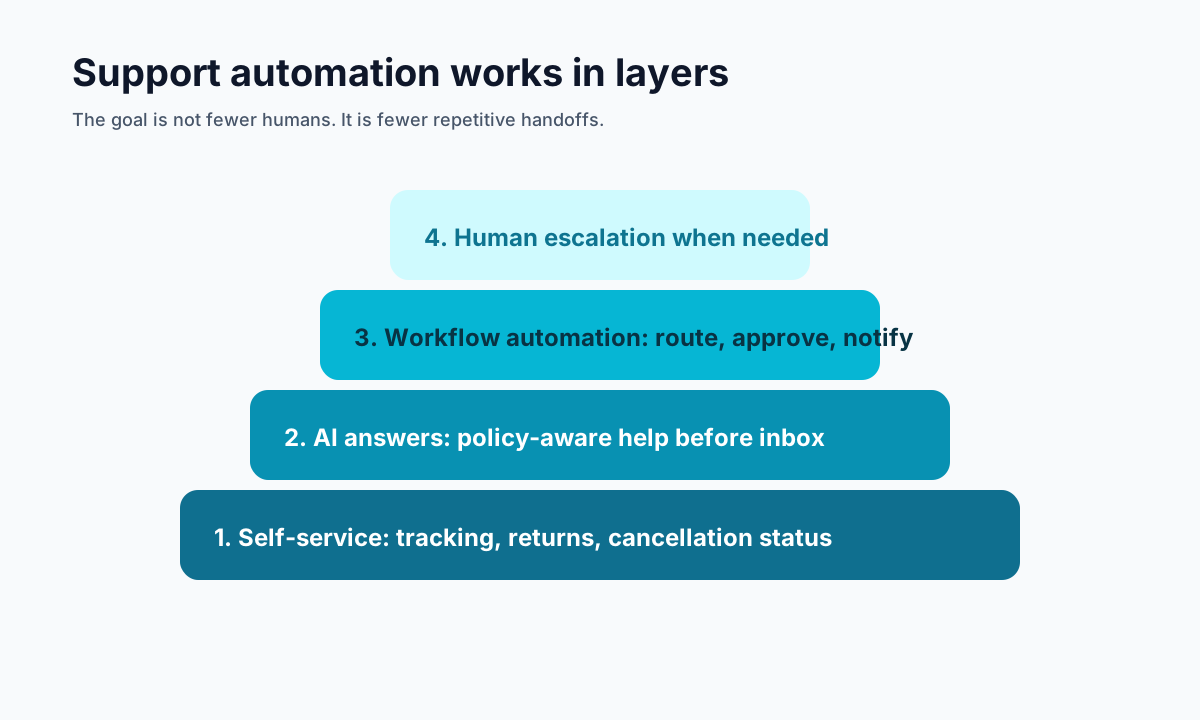
<!-- trexa-visual-elements:start -->Visual guide: which support layer do you need?
Most merchants compare app names too early. Start by deciding which layer of support work you need to fix.
| Need | App category | Look for |
|---|---|---|
| Inbox organization | Helpdesk | Assignments, macros, SLA views. |
| Post-purchase deflection | Self-service platform | Tracking, returns, cancellations, AI answers. |
| Complex escalation | Full support suite | Rules, routing, integrations, reporting. |
What a Shopify customer service app should actually do
<!-- trexa-section-visual:support -->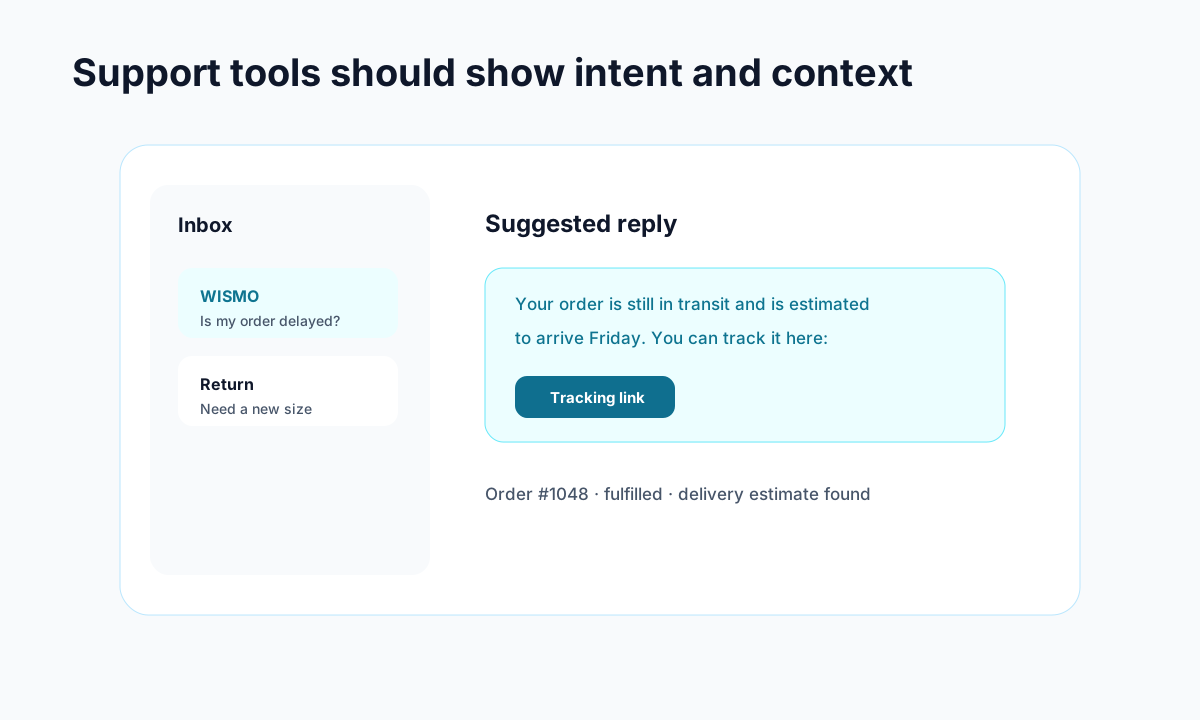
Example: support gets faster when intent, order context, and draft replies live together.
A solid Shopify customer service app should do more than collect messages.
At minimum, it should help your team:
- see order details without switching tabs
- answer common questions faster
- handle order status, returns, and cancellations cleanly
- support self service where it makes sense
- keep communication consistent across email, chat, and social channels
- give you reporting on ticket volume and repeat issues
If your support pain is heavily post-purchase, it also helps to think beyond the inbox. Stores with lots of WISMO traffic often get more leverage from stronger order visibility and self service than from adding more macros alone.
If that sounds familiar, start with Trexa's guides on what WISMO is and how to reduce Shopify support tickets.
Best Shopify customer service app picks by use case
<!-- trexa-section-visual:comparison -->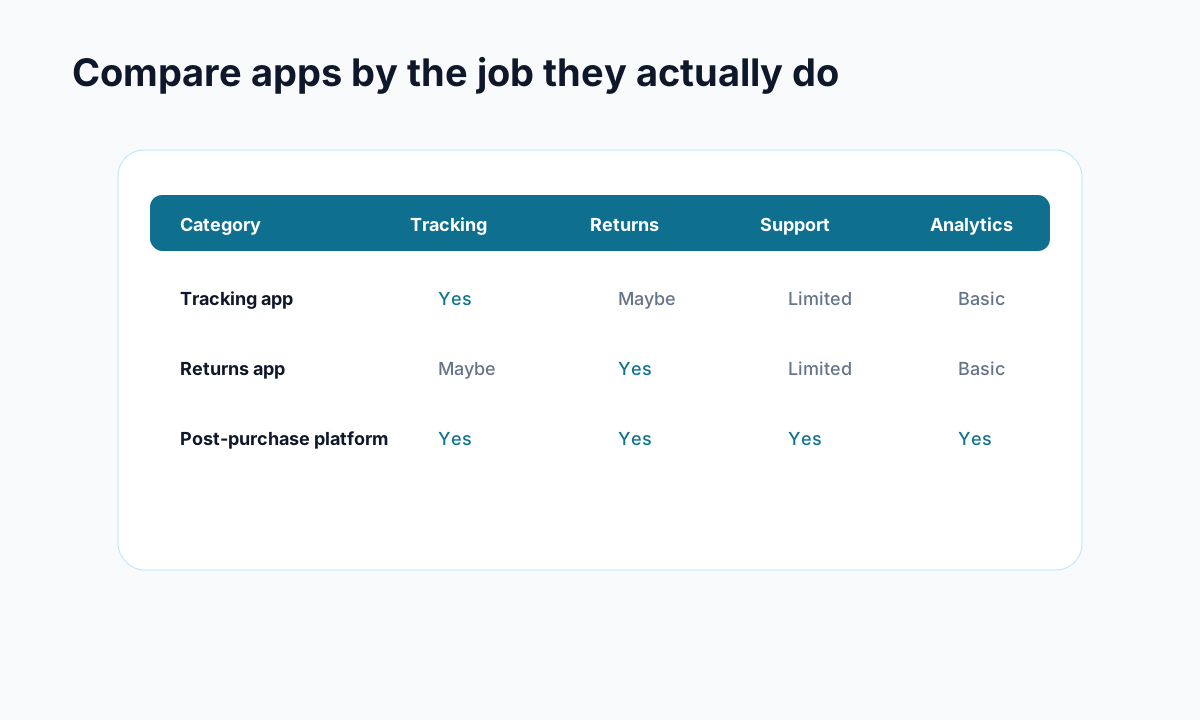
Example: compare apps by the operational jobs they cover, not by feature-page language.
There is no single best fit for every store. Here is the practical breakdown.
1. Trexa, best for post-purchase support reduction
Trexa is the strongest fit if your support volume is driven by order tracking questions, returns, cancellations, and other post-purchase requests.
Instead of treating support as a standalone inbox problem, Trexa connects the full post-purchase flow:
- branded order tracking
- customer self service
- return and cancellation workflows
- support context in one place
That matters because a lot of support volume is preventable. If customers can track an order clearly, understand the next step, and resolve simple issues without emailing your team, ticket volume drops before an agent has to touch anything.
Trexa is a good fit if your store wants a customer service app that helps reduce demand, not just process it faster.
Related reads:
- Branded order tracking pages
- Shopify order cancellation best practices
- Shopify self-serve returns guide
2. Gorgias, best for Shopify-first helpdesk workflows
Gorgias is still one of the first tools many Shopify brands look at, and for good reason. It has strong Shopify integration, pulls customer and order data into tickets, and gives support teams a familiar helpdesk workflow.
It is a strong fit when your main need is agent productivity inside a centralized support environment. If your team works across email, chat, social, and macros all day, Gorgias makes sense.
Where some stores hit a ceiling is that better inbox tooling does not automatically reduce repetitive ticket demand. If your issue is too many order status questions, you may still need a better post-purchase experience, not just a better queue.
When Gorgias is the right fit
Gorgias is a smart pick if you need:
- multi-channel support in one workspace
- stronger agent workflows
- Shopify data inside each conversation
- automations and macros for faster replies
3. Help Scout, best for simplicity and affordability
Help Scout is a good option for teams that want a cleaner support experience without a heavy rollout. It covers shared inbox, chat, knowledge base, reporting, and a useful Shopify integration.
I like Help Scout most for stores that want solid support fundamentals and a gentler learning curve. It is less Shopify-opinionated than Gorgias, but that can be a plus for smaller teams that value ease of use over deep workflow complexity.
It is also one of the more practical choices if you want to improve support quality quickly without rebuilding your entire stack.
4. Shopify Inbox, best for very small stores
Shopify Inbox is the obvious starting point for newer merchants. It is free, easy to set up, and native to the platform.
If you are a small store with low ticket volume, that may be enough for a while.
The tradeoff is that Shopify Inbox is not designed for deeper support operations or broad post-purchase workflow control. Once volume grows, most teams outgrow it.
5. Richpanel, best for self-service portals
Richpanel is worth a look if you want a stronger self-service layer. Its positioning leans heavily into helping customers solve routine issues on their own, which can reduce support load if your store gets lots of repetitive order and policy questions.
This is especially useful when customers want to check status, edit details, or start common post-purchase actions without waiting for a person.
How to choose the right support app for your store
The fastest way to choose well is to look at what kind of support pain you actually have.
Choose an inbox-first tool if:
- your issue is agent speed
- you need one place for all channels
- your team lives inside a helpdesk all day
- reporting, routing, and macros are the main need
In that case, Gorgias or Help Scout will usually be near the top of your list.
Choose a post-purchase self-service tool if:
- your inbox is full of where is my order questions
- returns and cancellations create repeated manual work
- customers struggle after checkout
- you want fewer tickets, not just faster replies
In that case, tools like Trexa or Richpanel make more sense because they improve the customer journey itself.
The mistake most merchants make
A lot of merchants choose a support app by comparing feature checklists instead of comparing ticket causes.
That is backwards.
If your support queue is packed with post-purchase confusion, adding more helpdesk features may help a little, but it will not fix the root issue. The better move is to remove avoidable questions before they become tickets.
That is why it helps to review support alongside the post-purchase experience. These guides are useful next steps:
- Shopify shipping notification emails best practices
- Shopify customer service cost
- Shopify order tracking guide
Final recommendation
If you need a classic helpdesk, start with Gorgias or Help Scout.
If you need a basic free option, start with Shopify Inbox.
If your real problem is post-purchase support volume, Trexa is the stronger pick because it tackles the source of repetitive tickets, not just the reply workflow.
That is the question that matters most: do you need better ticket handling, or do you need fewer tickets?
If the answer is fewer tickets, your support stack should help customers solve more on their own after checkout.
For broader context, it is worth reviewing Shopify's own overview of customer service apps and the Shopify App Store support category to compare current options before you decide.
Ready to reduce your support tickets?
Trexa gives your Shopify store AI-powered order tracking, automated support, and self-serve returns. Start free with 10 orders/month.
Start FreeExplore related Trexa pages