Shopify Customer Service Cost: What Support Really Costs in 2026
A practical guide to Shopify customer service cost, including cost per ticket, cost per order, and the fastest ways to cut support spend.
Shopify Customer Service Cost: What Support Really Costs in 2026
Shopify customer service cost is easy to underestimate until your inbox turns into a second full-time job. Most stores do not notice the problem when sales are small. Then ticket volume climbs, response times slip, and support quietly starts eating margin.
The good news is that you can measure it, control it, and lower it without making customers miserable. In this guide, I will break down what Shopify customer service usually costs, how to calculate your own support cost per order, and which changes cut spend fastest.
If support volume is already getting noisy, start with these related reads on how to reduce Shopify support tickets, what WISMO means for ecommerce teams, and why branded order tracking pages matter.
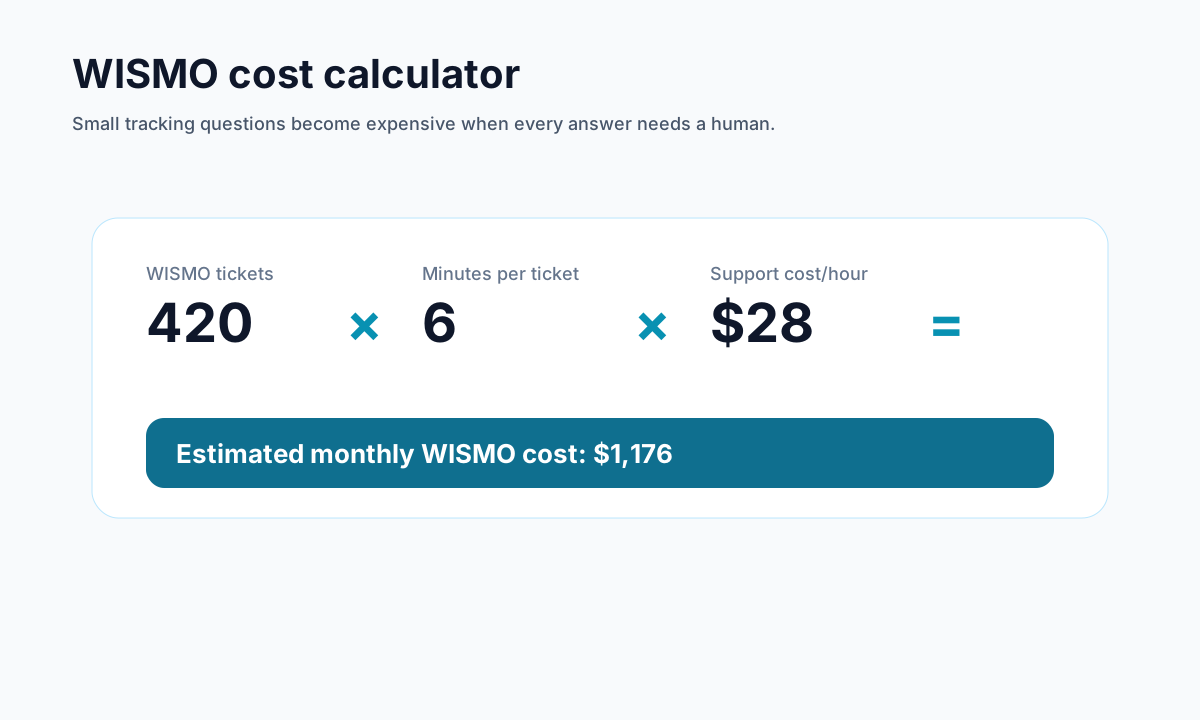
<!-- trexa-visual-elements:start -->Visual guide: support cost calculator
The fastest way to make support cost visible is to multiply ticket volume by handling time and hourly cost.
| Cost driver | How it increases spend | How to reduce it |
|---|---|---|
| WISMO tickets | Every tracking question takes agent time. | Branded tracking and proactive updates. |
| Manual returns | Agents repeat policy and eligibility checks. | Self-serve return rules. |
| Scattered tools | Agents copy context between apps. | Consolidated post-purchase workflow. |
Start with cost per ticket
<!-- trexa-section-visual:support -->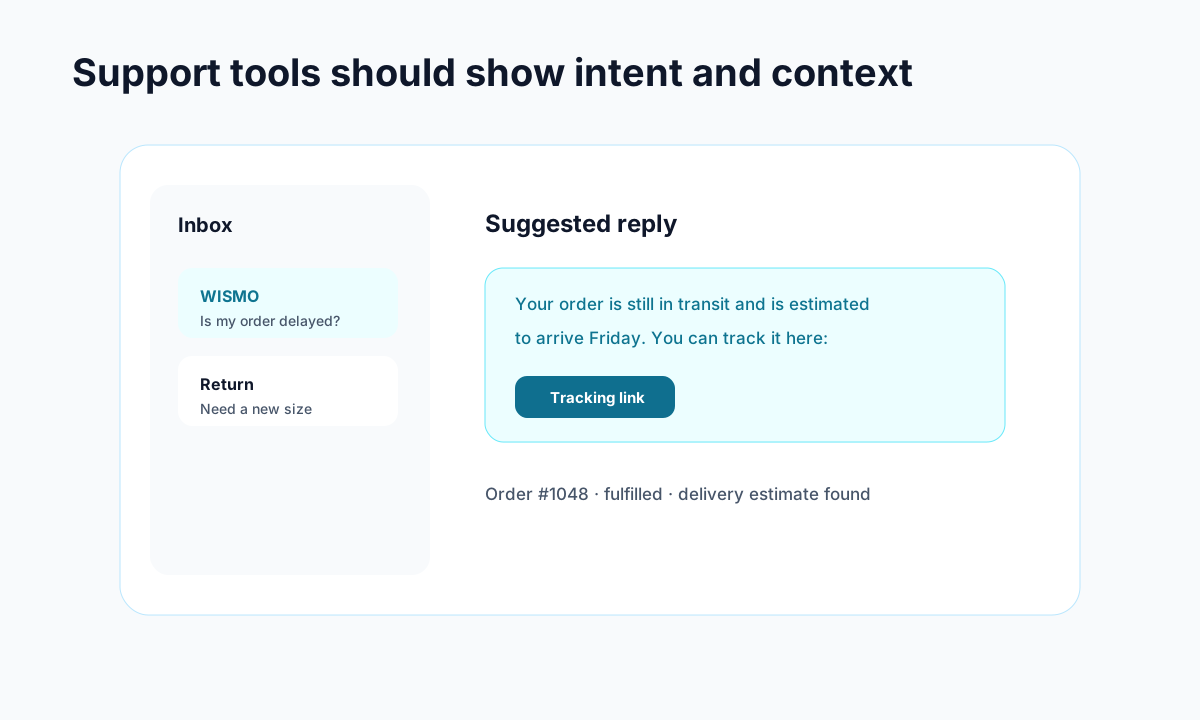
Example: support gets faster when intent, order context, and draft replies live together.
The cleanest way to understand Shopify customer service cost is to calculate cost per ticket.
Use this formula:
Cost per ticket = total monthly support cost / total monthly tickets resolved
Your monthly support cost should include:
- Agent wages or contractor fees
- Helpdesk software
- Chat tools
- QA or management time
- Refund handling time when support owns it
- Outsourcing fees if you use an agency or VA team
A second useful formula is support cost per order:
Support cost per order = total monthly support cost / total monthly orders
Why both numbers matter:
- Cost per ticket tells you how efficient your support operation is
- Cost per order tells you how much support is eating into every sale
For ecommerce, published benchmarks often place support interactions in the low single digits per ticket, though your real number can climb fast if humans handle every repetitive question. That is why stores with strong self-service flows usually protect margin better than stores that rely on manual replies for every shipment update and return request.
What drives support costs up
A lot of merchants assume headcount is the whole story. It is not. Shopify customer service cost usually rises because of a few specific patterns.
1. Too many WISMO tickets
When customers cannot easily find shipping updates, they email you. Then they email again. Then they open chat.
That is why WISMO tends to dominate post-purchase support. If customers have to ask where their order is, your support team becomes a tracking portal with extra steps.
A stronger order status experience, delivery updates, and visible policy answers can remove a big chunk of that volume before it becomes a ticket.
2. Support happens in too many places
Email, chat, Instagram DMs, contact forms, and WhatsApp all feel manageable until nobody has a full view of the conversation. Channel sprawl increases duplicate work, slower replies, and missed context.
3. Agents answer the same questions manually
If your team is hand-writing replies for shipping times, return windows, exchange rules, and cancellation requests, the operation gets expensive fast.
4. You are paying for software without reducing volume
A helpdesk can improve workflows, but it does not automatically lower Shopify customer service cost. If you add tools without fixing root causes, you just stack software spend on top of the same ticket volume.
Typical support cost by support model
Your actual number depends on volume, channel mix, and staffing model, but these ranges are useful for planning.
Solo founder setup
Typical monthly cost: $0 to $150
This usually means Shopify Inbox, personal email, maybe a lightweight chat tool, and your own time. Cash cost is low. Time cost is not. Once support takes one to two hours a day, this setup gets expensive in a different way because it steals founder time from growth.
Small team with a helpdesk
Typical monthly cost: $50 to $800+
This is common for stores that centralize support with a helpdesk, shared inbox, macros, and some automation. The main cost drivers are seat count, contact volume, and add-ons.
Outsourced support
Typical monthly cost: $1,000 to $4,000+
Outsourcing can work well when volume is steady and processes are documented. The tradeoff is management overhead. You still need training, QA, and clear escalation paths.
In-house support team
Typical monthly cost: $4,000 to $15,000+
This is where Shopify customer service cost becomes very real. Salaries, benefits, turnover, scheduling, and tool costs compound quickly. It can be the right move for larger brands, but only if you are also deflecting routine tickets aggressively.
How to calculate your support cost in 10 minutes
Pull these four numbers from the last 30 days:
- Total support payroll and contractor spend
- Total support software spend
- Total resolved tickets
- Total orders
Now run both formulas.
Here is a simple example:
- Support payroll: $2,400
- Tools: $300
- Resolved tickets: 600
- Orders: 1,200
That gives you:
- Cost per ticket = $2,700 / 600 = $4.50
- Support cost per order = $2,700 / 1,200 = $2.25
Now ask the harder question: which tickets should never have existed?
If 35 percent of those tickets were shipment status questions and another 20 percent were return policy questions, you do not have a staffing problem first. You have a deflection problem.
The fastest ways to lower Shopify customer service cost
Lower support spend with self-service
The cheapest support ticket is the one a customer never has to open.
That is why the best cost reduction work usually happens before a human gets involved.
Focus on these first:
- A clear branded tracking page with live shipment updates
- Return and cancellation rules written in plain English
- FAQ answers linked from shipping and order emails
- Instant answers for common pre-purchase and post-purchase questions
This is exactly where tools like Trexa help. Instead of forcing customers to contact support for tracking, returns, or cancellations, you give them a self-serve path inside the post-purchase experience.
Lower support spend with better routing
Not every ticket deserves the same workflow.
Create simple routing rules such as:
- Shipping status to automated tracking response
- Return eligibility to return policy or return portal
- Cancellation requests to order status checks and cancellation flow
- Complex complaints to a human queue
That keeps humans focused on exceptions, not repetition.
Lower support spend with proactive communication
Silence creates tickets.
If customers do not know what happens next, they ask. Good proactive support includes:
- Order confirmation email with expectations
- Shipping confirmation with tracking link
- Delay notification when something slips
- Return received and refund status updates
Shopify's own help docs on canceling orders show how operational rules matter, but the customer-facing communication around those rules matters just as much.
What a healthy support cost profile looks like
A healthy Shopify support operation usually has these traits:
- Cost per ticket is tracked monthly
- WISMO is trending down, not up
- First response time is predictable
- Customers can self-serve tracking and policy questions
- Agents spend more time on exceptions than status checks
If you are not measuring deflection rate yet, start there. It is one of the clearest indicators that your support system is improving instead of just getting busier.
Shopify customer service cost rarely drops because a team simply works harder. It drops when the store removes avoidable questions, gives customers clear next steps, and reserves humans for moments where judgment actually matters.
If you want to cut support cost without hurting customer experience, start with the post-purchase journey. Better tracking, clearer policies, and self-serve returns usually move the needle faster than hiring another person. A simple post-purchase system that handles those jobs well can pay for itself quickly.
Ready to reduce your support tickets?
Trexa gives your Shopify store AI-powered order tracking, automated support, and self-serve returns. Start free with 10 orders/month.
Start FreeExplore related Trexa pages