Best Shopify Returns App for 2026: What to Look For
A practical guide to picking the best Shopify returns app based on automation, exchange flows, analytics, and support impact.
If you're shopping for a Shopify returns app, you're probably already feeling the pain. Support keeps answering return questions, refunds chip away at margin, and every manual approval adds more drag to a process customers expect to be fast.
A good Shopify returns app does more than create labels. It gives customers a clean self-serve flow, helps your team enforce policy without busywork, and nudges more shoppers toward exchanges or store credit instead of straight refunds. In this guide, you'll see what matters, which app types fit different store stages, and how to choose without getting distracted by shiny feature lists.
<!-- trexa-visual-elements:start -->Visual guide: choosing a returns workflow
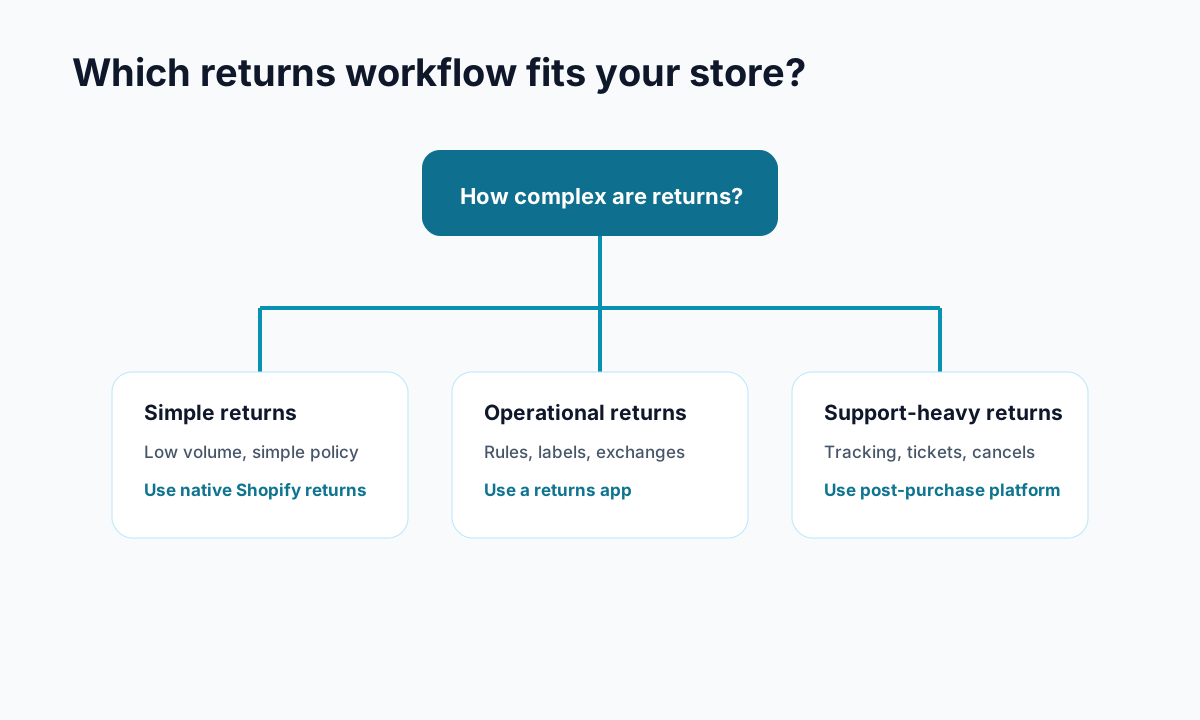
The best Shopify returns app depends on whether returns are a policy problem, an operations problem, or a support problem.
| Store situation | Best fit | Why |
|---|---|---|
| Low return volume | Native Shopify returns | Good enough when rules are simple and manual review is fine. |
| Growing return volume | Dedicated returns app | Useful for labels, exchanges, and more automation. |
| Returns create tickets | Post-purchase platform | Connects returns with tracking, cancellations, and support. |
Helpful reference:
<!-- trexa-visual-elements:end -->What a Shopify returns app should actually solve
<!-- trexa-section-visual:returns -->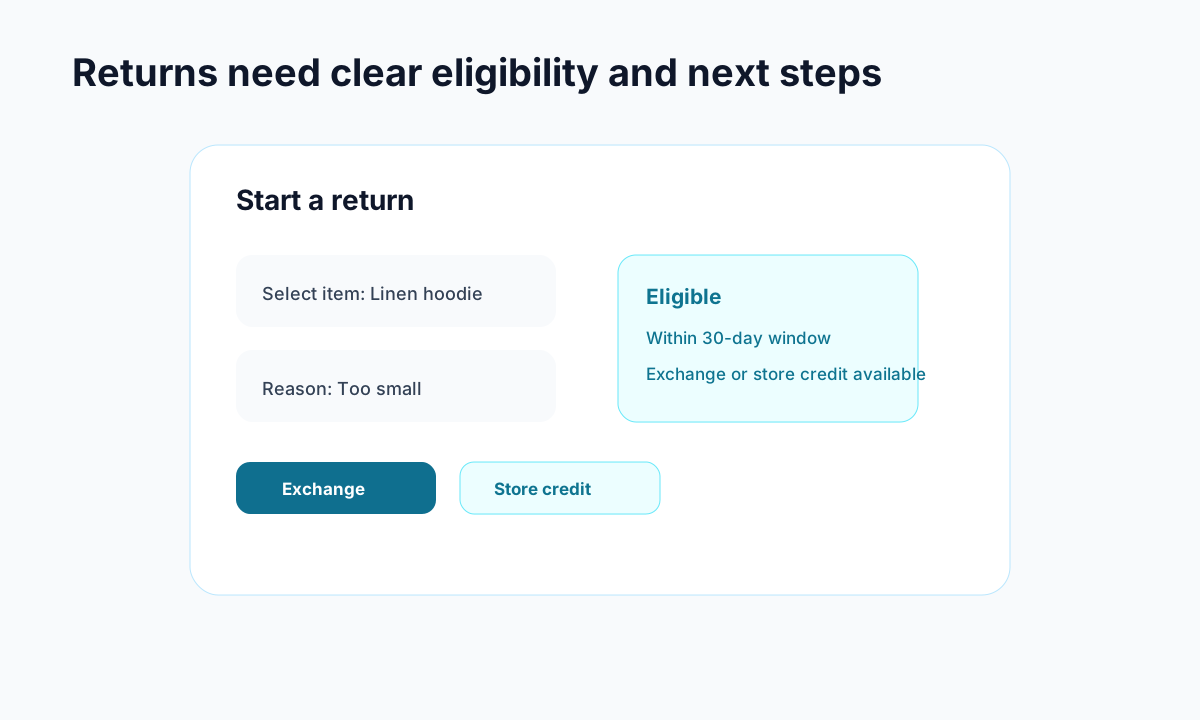
Example: a return flow should show eligibility and resolution options before a customer emails support.
Most stores do not need "more return features." They need fewer manual steps and fewer support tickets.
At a minimum, a Shopify returns app should help you:
- let customers start returns without emailing support
- apply your return policy automatically
- generate labels and update return status in one place
- offer exchanges or store credit before refunding cash
- show you why products are coming back
Shopify's native returns tools have improved, and Shopify's self-serve returns docs are worth reviewing. But once volume picks up, most merchants need more control over workflows, branding, and revenue recovery.
That is the real reason this category exists. A Shopify returns app is not just an operations tool. It is part of your broader post-purchase experience and support stack.
Best Shopify returns app features to compare first
<!-- trexa-section-visual:comparison -->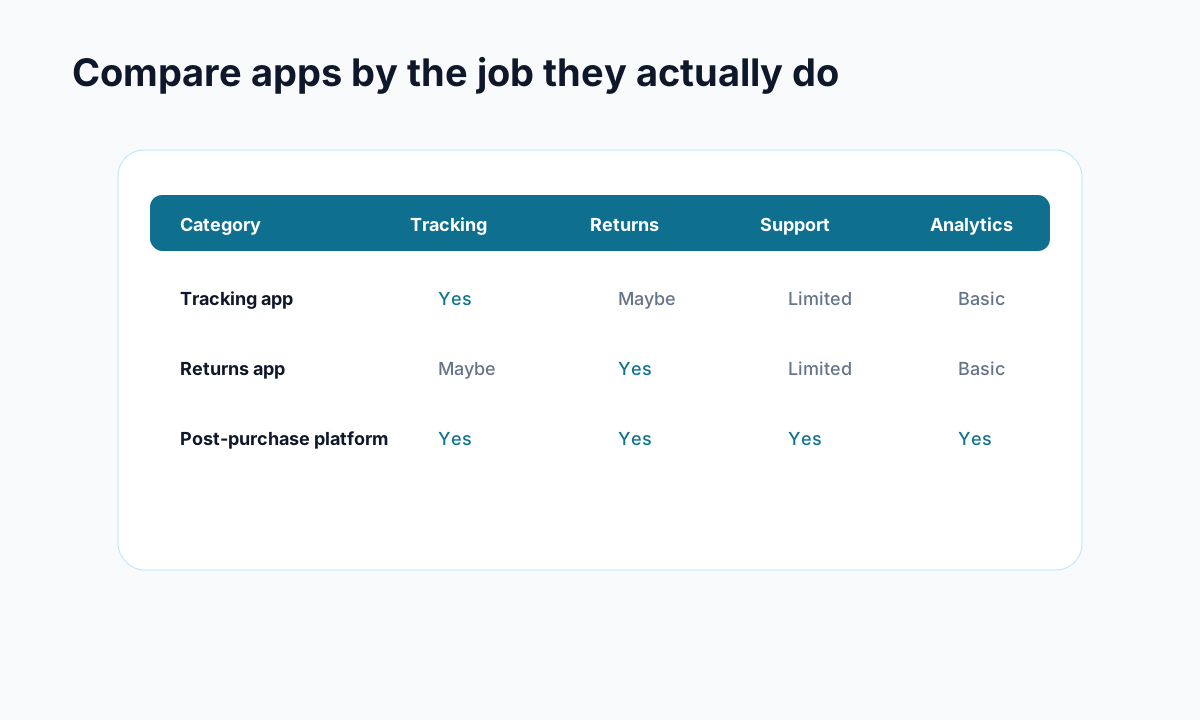
Example: compare apps by the operational jobs they cover, not by feature-page language.
When merchants compare apps, they often focus on star ratings or price first. That is understandable, but it usually leads to a bad pick. Start with the workflow.
1. Self-serve portal quality
Your returns portal should feel simple on mobile, match your brand, and make eligibility clear before the customer gets frustrated. If shoppers cannot tell whether an item qualifies, they will still open a ticket.
Look for:
- branded portal or on-domain experience
- easy order lookup
- clear return windows and exclusions
- live return status updates
- a flow that does not force support intervention
If you already care about reducing "where is my order" noise, you have seen this pattern before in branded order tracking pages. The best post-purchase experiences remove anxiety before it turns into a contact.
2. Policy automation
This is where a good app starts paying for itself. You should be able to auto-approve low-risk returns, block final sale items, apply window rules, and route edge cases for review.
Without automation, your team becomes the rules engine.
That might work at 20 orders a day. It breaks at 200.
3. Exchange and store credit options
This is the biggest commercial lever in the category. The strongest tools do not treat refunds as the default outcome. They make exchanges, variant swaps, and store credit easy to understand and easier to accept.
If an app has fancy branding but weak exchange flows, it is leaving money on the table.
4. Carrier and label flexibility
Some stores only need basic label creation. Others need QR code returns, multiple carrier options, international support, or routing logic based on geography and cost. Be honest about your complexity now and again six months from now.
5. Return analytics
A Shopify returns app should not just process returns. It should help you reduce them.
You want reporting that shows:
- return reasons by SKU or variant
- refund versus exchange rate
- processing time
- repeat return patterns
- categories creating the most support load
That data is useful beyond operations. It helps product, merchandising, and support teams fix root causes.
Which type of Shopify returns app fits your store
There is no single winner for every merchant. The right choice depends mostly on stage, volume, and how much margin you want to protect.
Budget-friendly apps for small stores
If you are early, a lightweight app with a free plan or low starting tier can be enough. Prioritize ease of setup, clean customer experience, and basic automation. You do not need enterprise workflows if returns are still manageable.
The risk here is choosing something so limited that you outgrow it in a quarter.
Exchange-first apps for growing brands
As return volume rises, exchange flows matter more. This is where higher-priced tools often justify themselves. If they help you retain revenue and cut support time, the monthly fee can be cheap compared with manual handling and refund leakage.
This is the same logic behind investing in Shopify returns management best practices instead of patching the process with inbox work.
Complex operations tools for high-volume stores
If you have multiple warehouses, international routing, or lots of policy exceptions, you need deeper workflow control and broader integrations. At that point, the question is less "what is the cheapest app" and more "what keeps operations sane at scale?"
Common mistakes when choosing a Shopify returns app
A lot of comparison posts stop at feature lists. That is not enough. Here are the mistakes that actually cause regret:
Picking based on sticker price alone
A $19 app that still creates manual work is often more expensive than a $99 app that cuts tickets, saves support time, and keeps more exchanges in the store.
Ignoring support volume
Returns are not just warehouse events. They create customer conversations. If your return flow is unclear, you will feel it in your inbox and chat queue fast.
Overlooking branding
A clunky third-party portal can make your store feel smaller and less trustworthy. That matters more than people admit.
Not testing the customer flow yourself
Run a fake return. Use your phone. See how many clicks it takes, where friction shows up, and whether the app explains next steps clearly.
How to shortlist the best Shopify returns app for your store
Here is a practical way to narrow the field fast:
- List your current monthly return volume.
- Decide whether exchange retention matters more than lowest cost.
- Write down any policy complexity, like exclusions, fees, or international returns.
- Check whether you need carrier, helpdesk, or WMS integrations.
- Test the portal experience on mobile.
- Compare how each app handles exchanges, store credit, and analytics.
You can also review the current Shopify returns and exchanges app category to see which tools are active and well reviewed, but do not stop there. App store listings rarely tell you how much support work the app actually removes.
The bottom line on choosing a Shopify returns app
The best Shopify returns app is the one that reduces friction for customers and manual work for your team at the same time.
For smaller stores, that usually means starting with a simple self-serve tool that has solid automation and room to grow. For larger brands, it usually means paying more for better exchange flows, deeper rules, and stronger analytics.
Either way, do not treat returns as a side process. They are part of the customer experience after checkout, and they shape whether shoppers buy from you again.
If you are cleaning up a messy post-purchase flow, tools like Trexa can help connect tracking, support deflection, and self-serve workflows so customers need less hand-holding after they order. That does not replace a dedicated returns app for every store, but it does make the rest of the experience feel much more put together.
Choose the app that removes repeat work, keeps customers informed, and protects revenue when returns happen. That is the one that will still look good six months from now.
Ready to reduce your support tickets?
Trexa gives your Shopify store AI-powered order tracking, automated support, and self-serve returns. Start free with 10 orders/month.
Start FreeExplore related Trexa pages