Shopify Returns Management: Best Practices for 2026
A practical guide to Shopify returns management, including return rules, self-serve workflows, exchanges, and the metrics that help reduce support load.
Shopify returns management can quietly drain margins, bury your team in repetitive tickets, and push customers away if the process feels messy. The good news is that you do not need a giant ops team to fix it. With the right rules, workflows, and self-serve options, Shopify returns management can become faster for your team and easier for your customers.
In this guide, you will learn how Shopify returns management works, which steps matter most, how to reduce refund-related support load, and when to use built-in features versus an app.
<!-- trexa-visual-elements:start -->Visual guide: returns management workflow
Good returns management separates simple eligible returns from edge cases that deserve human attention.
| Workflow area | Best practice | Metric |
|---|---|---|
| Eligibility | Use rules before the customer submits. | Declined or ineligible requests |
| Resolution | Offer exchanges and store credit where appropriate. | Refund rate |
| Analytics | Track reasons and repeat patterns. | Return reason trends |
Helpful reference:
<!-- trexa-visual-elements:end -->What Shopify returns management actually includes
<!-- trexa-section-visual:returns -->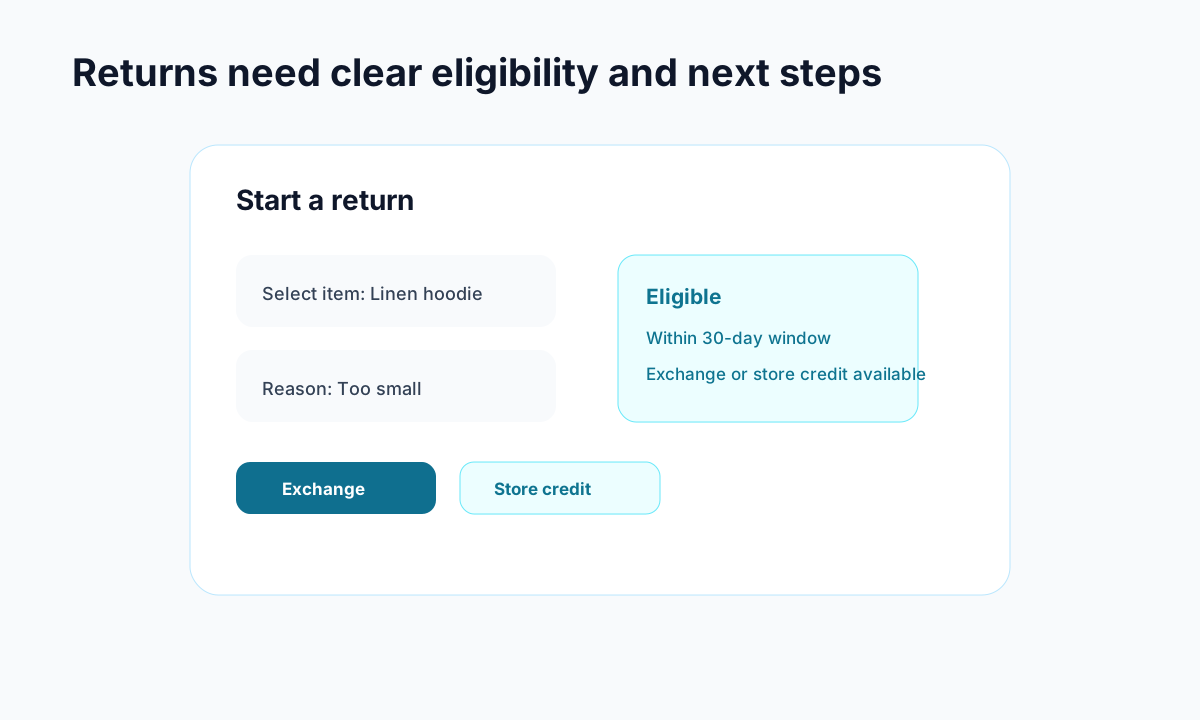
Example: a return flow should show eligibility and resolution options before a customer emails support.
At a basic level, Shopify returns management covers every step between a customer requesting a return and your store closing the loop. That includes:
- checking whether the item is eligible
- approving or denying the request
- sending return instructions or a label
- receiving and inspecting the item
- restocking, exchanging, refunding, or issuing store credit
- notifying the customer along the way
A lot of stores treat returns like a one-off support task. That is usually where things go sideways. Competitor content from Shopify, Mipler, and PULPO all leans on the same core point: returns work best when they follow a clear system, not an inbox thread.
If you are still handling most return requests manually over email, you are likely paying for it twice, once in labor and again in customer frustration. The same pattern shows up in support-heavy post-purchase flows like WISMO tickets and other repetitive order questions.
Why Shopify returns management matters more than most stores think
Returns are not just a refund problem. They affect customer trust, support costs, inventory accuracy, and repeat purchase rate.
Here is why strong Shopify returns management matters:
1. It reduces avoidable support tickets
When customers cannot tell whether an item is eligible, where to send it, or when the refund will land, they open tickets. That creates the same kind of noise merchants see with shipping questions. A clearer returns workflow means fewer "can I return this?" and "where is my refund?" emails.
2. It helps you recover revenue
An exchange or store credit is often better than a straight refund. If your workflow offers those options at the right moment, you can save sales that would otherwise disappear.
3. It protects inventory accuracy
Returned items need a clean process for inspection and restocking. If that step is sloppy, you end up with inaccurate stock counts and delayed re-sale.
4. It builds trust before the customer even buys
Many shoppers check the return policy before placing their first order. A confusing or hidden policy creates hesitation. A simple, fair policy lowers purchase anxiety.
That is also why returns should sit inside your broader post-purchase experience, not off to the side. We have seen the same principle in branded order tracking pages, where transparency lowers support load and increases confidence.
How to set up Shopify returns management that scales
The best Shopify returns management setup is boring in the best way. Customers know what to do. Your team is not improvising. The system handles common cases automatically.
Start with these five pieces.
Write a return policy that answers real questions
A policy should be easy to find and easy to understand. At minimum, cover:
- return window
- item condition requirements
- final sale exclusions
- exchange availability
- refund method
- return shipping responsibility
- processing timeline
Do not write this like legal homework. Write it the way a customer would ask it.
Instead of vague language like "returns may be accepted in certain circumstances," say exactly what qualifies and how long the customer has.
For policy details, it is worth cross-checking Shopify's own returns documentation and policy settings guidance so your rules match what the platform supports.
Use Shopify return rules to filter common edge cases
One of the strongest ideas across the top-ranking posts is that rules prevent bad requests from becoming support work.
Use Shopify return rules to define things like:
- how many days after delivery a return is allowed
- which products or collections are final sale
- whether the customer pays return shipping
- whether a restocking fee applies
This matters because every unclear case becomes a manual review. Rules move those decisions upstream.
If your store sells items with very different margins or risk profiles, do not force one blanket rule across everything. Accessories, personalized goods, and apparel often need different handling.
Add self-serve returns before volume forces you to
This is where many stores save the most time. Self-serve returns let customers start the process without emailing support first.
That usually means they can:
- choose the items they want to return
- pick a return reason
- see whether the return is eligible
- get instructions or a label
- track the return status
This removes a huge chunk of repetitive admin. It also gives customers a better experience because they are not waiting for a human to answer basic eligibility questions.
For many merchants, self-serve returns have the same operational upside as customer support automation: your team spends less time on predictable tasks and more time on the cases that actually need judgment.
Build your Shopify returns management workflow around exchanges and store credit
If every return path ends in a refund, you are leaving money on the table.
A stronger Shopify returns management flow offers alternatives when they make sense:
- Exchanges for size, color, or variant issues
- Store credit when the customer is open to trying something else
- Refunds when a replacement is not realistic
This is especially useful for apparel, beauty, and other categories where the product mismatch is not a total brand failure. Sometimes the customer picked the wrong size. Sometimes the item looked different than expected. A fast exchange path can turn a disappointing moment into a retained sale.
What matters is timing. Present the alternative during the return flow, not after support has gone back and forth for three emails.
Track the metrics that improve Shopify returns management
Most stores collect return reasons and never do much with them. That is a miss.
Good Shopify returns management produces data you can actually use. Look at:
- top return reasons by product
- return rate by collection
- exchange rate versus refund rate
- average time to resolution
- tickets created per return
- restockable versus non-restockable returns
Patterns here can drive real fixes. If one SKU gets repeat "not as described" returns, your product page may be the problem. If one category drives a high number of size-related returns, your size chart may need work. If customers keep asking about refund timing, your notification flow is probably too thin.
This is where operations and content should connect. Clearer product pages, better shipping updates, and better post-purchase messaging all reduce downstream return pain.
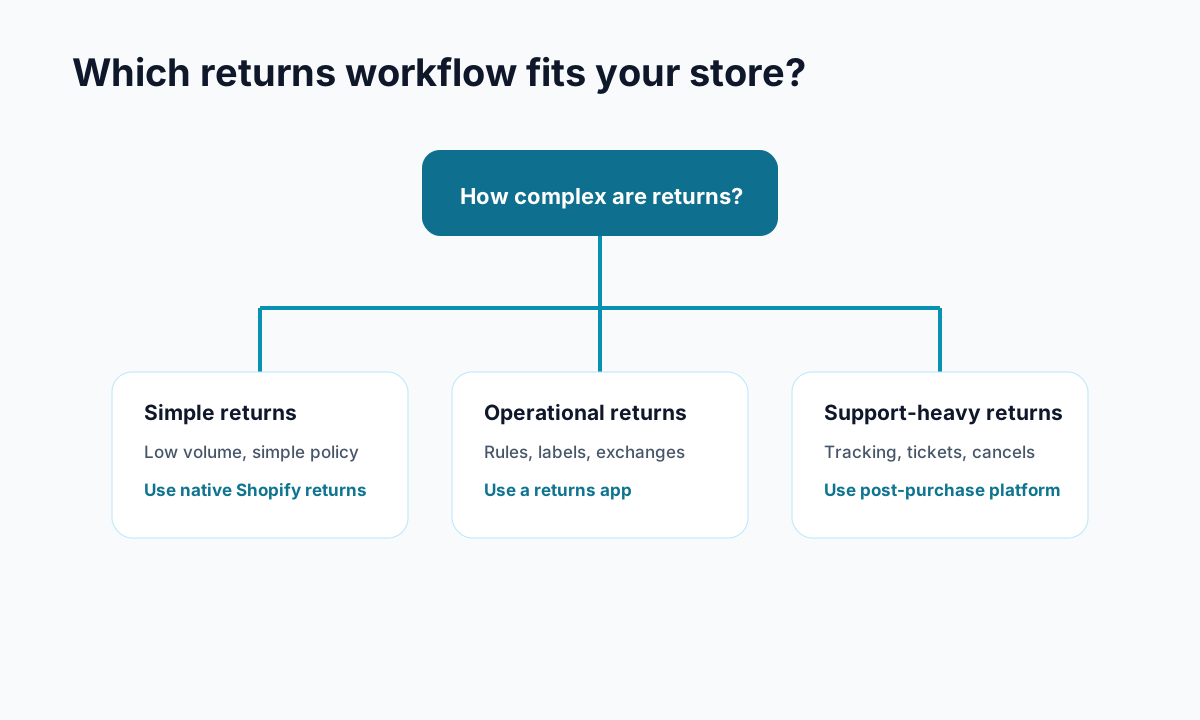
When to use Shopify built-in returns features vs a returns app
<!-- trexa-section-visual:comparison -->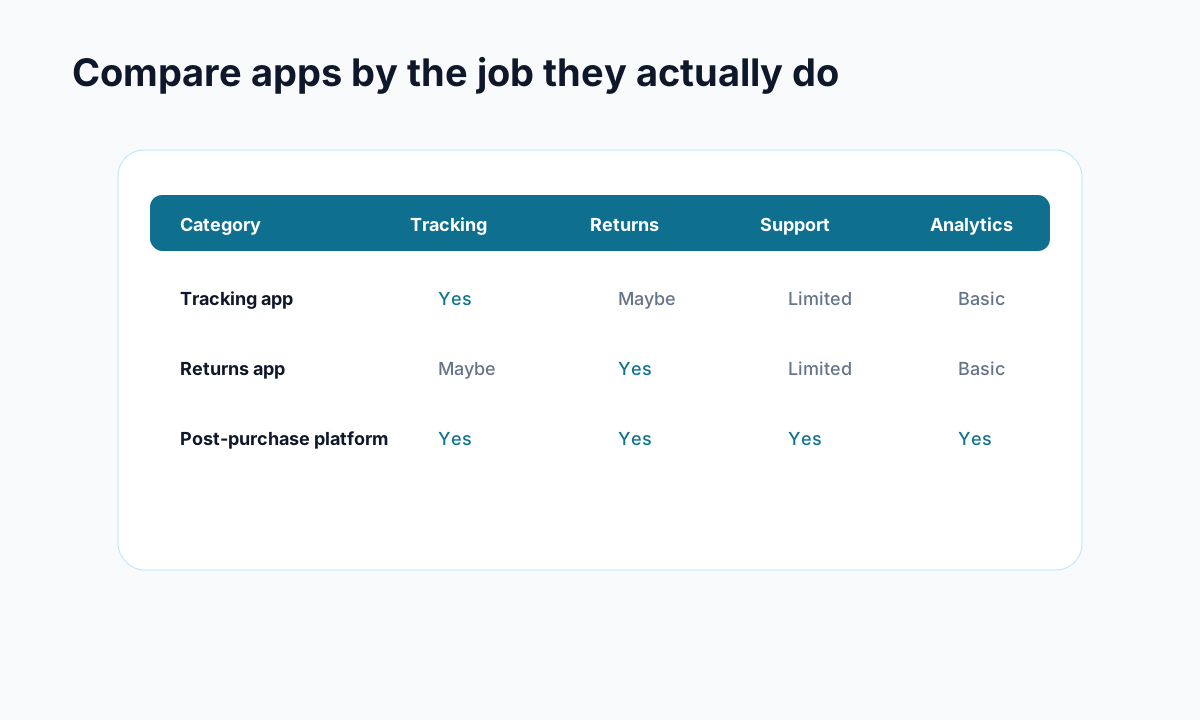
Example: compare apps by the operational jobs they cover, not by feature-page language.
For smaller stores, Shopify's built-in tools may be enough. If your volume is manageable and your process is straightforward, start there.
A dedicated returns app becomes more useful when:
- return volume is climbing
- you need a branded self-serve portal
- exchanges are a major revenue lever
- your policy logic is complex
- you need deeper analytics or carrier options
- your team is spending too much time on manual approvals and status updates
In plain terms, use native Shopify features until manual work starts creating real friction. Then add software to remove bottlenecks, not because a feature checklist looks impressive.
Tools like Trexa can also help connect returns into the broader support journey, especially when customers ask related post-purchase questions before or after submitting a return. That matters because customers do not think in feature silos. They just want a fast answer.
Final thoughts on Shopify returns management
The stores that handle returns well are not always the ones with the most elaborate setup. They are the ones with the clearest one.
Strong Shopify returns management comes down to a few basics: a visible policy, rules that reduce ambiguity, self-serve flows for common cases, and a workflow that favors exchanges or store credit when appropriate. Get those right and you reduce support load while making customers more comfortable buying from you in the first place.
If you are tightening up your post-purchase experience this quarter, returns is one of the highest-leverage places to start. And if you want that experience to feel more connected across tracking, support, cancellations, and returns, tools like Trexa are worth a look.
Ready to reduce your support tickets?
Trexa gives your Shopify store AI-powered order tracking, automated support, and self-serve returns. Start free with 10 orders/month.
Start FreeExplore related Trexa pages