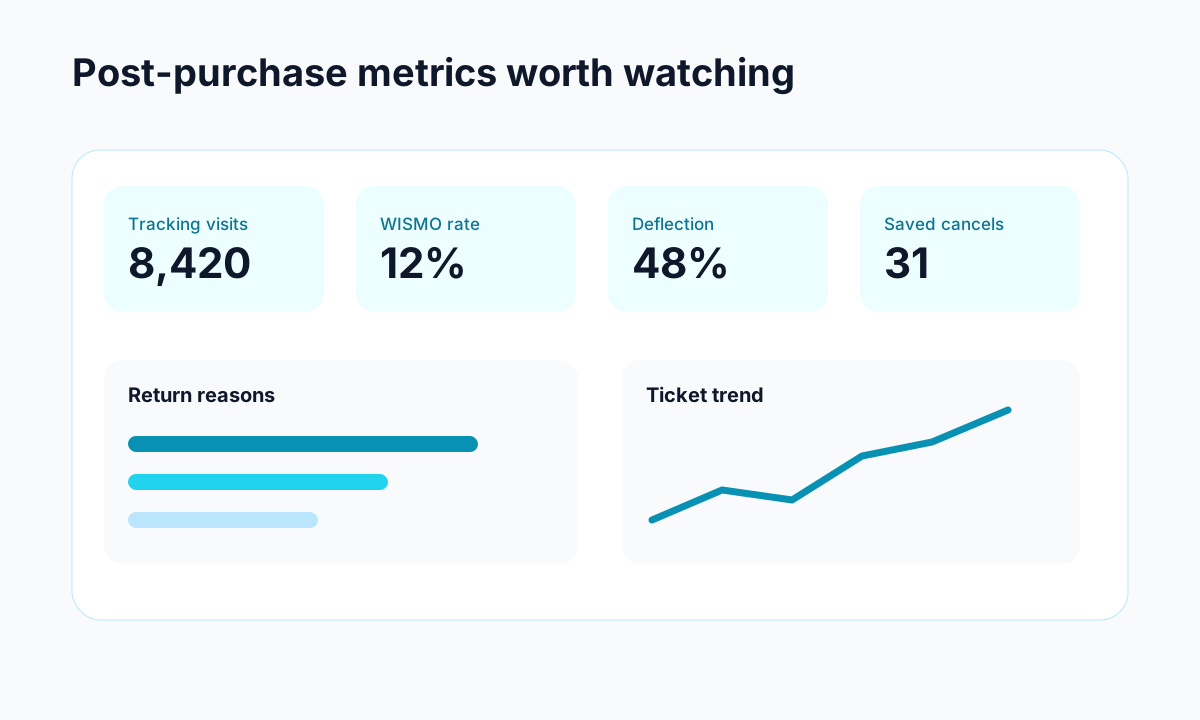
Shopify Customer Retention: 5 Post-Purchase Fixes
Customer retention starts after checkout. Use better tracking, returns, support, and post-purchase emails to earn the next order.
Shopify customer retention is where a lot of stores quietly win or lose money. Ads can bring in the first order, but the second order usually comes from trust: clear delivery updates, useful support, easy returns, and a reason to come back that is not just another discount.
The uncomfortable part is that most retention advice skips the messy middle after checkout. Loyalty points matter. Email matters. But if the customer spends the next two weeks wondering where the order is, chasing a return, or getting vague support replies, your retention program is already leaking.
This guide breaks down the practical Shopify customer retention moves that actually connect to the post-purchase experience, support workload, and repeat purchase behavior.
<!-- trexa-visual-elements:start -->Visual guide: retention levers after checkout
Use this as a quick map for where retention actually changes after the order is placed.
| Retention lever | What to improve | Metric to watch |
|---|---|---|
| Tracking | Keep customers on a branded tracking page instead of a carrier page. | Tracking visits and WISMO rate |
| Returns | Offer exchanges or store credit before defaulting to refunds. | Return-to-repurchase rate |
| Support | Answer routine questions before they become tickets. | Deflection rate |
Why Shopify customer retention starts after checkout
The post-purchase window is when a new customer decides whether buying from you felt easy or annoying. That first impression does not end at payment. It continues through the order confirmation, shipping updates, tracking page, delivery experience, support replies, return process, and follow-up emails.
If any of those steps feel unclear, customers start to lose confidence. They email support. They open tracking links from carriers that do not match your brand. They wonder whether your store is legitimate. They may still receive the product, but the next purchase becomes less likely.
Retention is not only a marketing metric. It is an operational metric.
Watch for these signals:
- Customers ask "where is my order?" even though tracking exists.
- Return requests need manual back-and-forth.
- First-time buyers do not click post-purchase emails.
- Support tickets spike around shipping delays.
- Customers use refunds instead of exchanges or store credit.
Each one points to friction after the sale. Fixing that friction is often cheaper than buying another first-time customer.
Shopify's own guidance on customer service KPIs is useful here because it treats support as measurable, not just reactive. If you pair support metrics with retention metrics, you can see which customer experience problems are costing repeat purchases.
Shopify customer retention metrics worth tracking
<!-- trexa-section-visual:tracking -->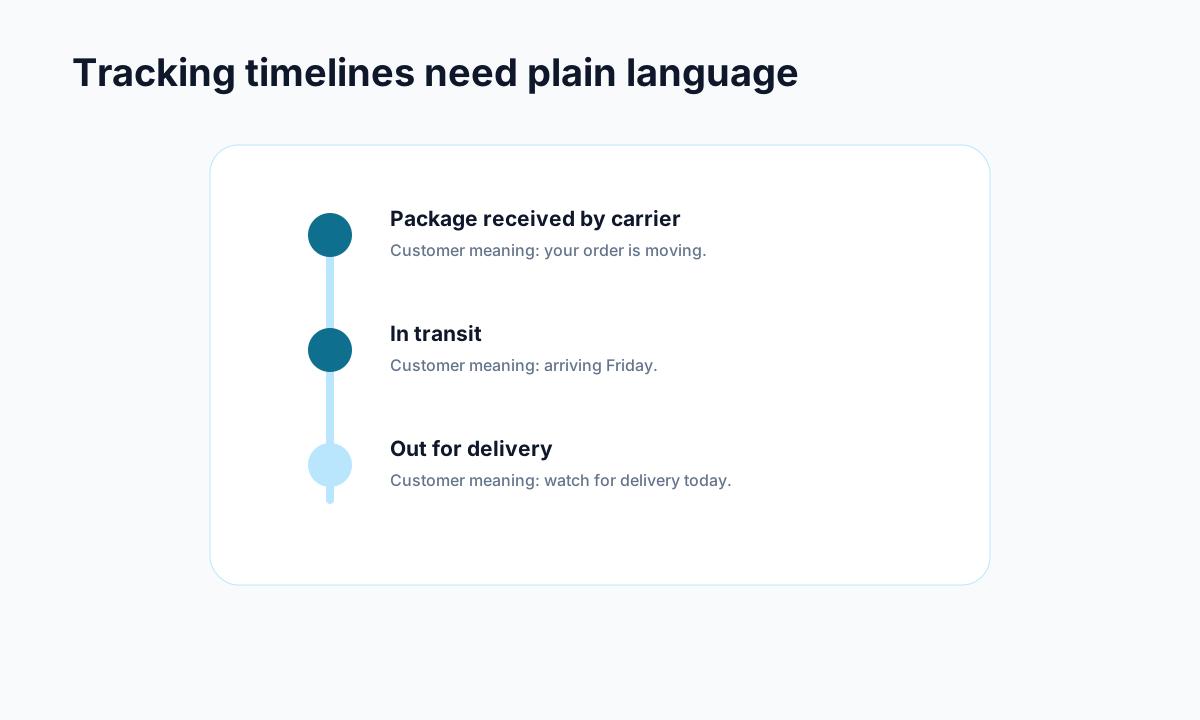
Example: carrier events become useful when they are translated into plain customer language.
You do not need a dashboard with 40 charts. For most Shopify stores, a small group of retention metrics tells the story.
Repeat purchase rate
Repeat purchase rate shows the percentage of customers who buy again within a specific window. Track it at 30, 60, 90, and 180 days after the first order. A weak 90-day repeat rate usually means your onboarding, product education, post-purchase emails, or replenishment timing needs work.
For consumables, the window may be shorter. For apparel, home goods, or higher-consideration products, it may be longer. The key is comparing cohorts over time instead of staring at one blended number.
Time to second purchase
Time to second purchase tells you how quickly customers return. This is one of the most useful retention metrics because it is easy to improve with better timing.
If the average second purchase happens around day 55, your day 7 discount email is probably too early. If customers typically reorder after 30 days but your replenishment reminder goes out on day 45, you are late.
Customer lifetime value
Customer lifetime value gives you the bigger picture. It helps answer whether your post-purchase work is making customers more valuable over time. Track LTV by acquisition source, first product purchased, support history, return behavior, and loyalty enrollment.
A customer who had one shipping issue but received proactive help may be more valuable than a customer who never contacted support but also never came back. Context matters.
Return-to-repurchase rate
This metric is underrated. It shows how many customers who returned an item came back to buy again.
A smooth return can preserve the relationship. A slow, confusing, or defensive return can kill it. If your return-to-repurchase rate is low, improve the return flow before you spend more on loyalty programs.
WISMO ticket rate
WISMO means "where is my order?" If this ticket type is high, your tracking experience is not doing its job. Start with what WISMO means for Shopify stores, then measure how many tracking questions hit support per 100 orders.
A lower WISMO rate usually means customers feel informed. Informed customers are calmer, easier to support, and more likely to trust the next purchase.
Practical Shopify customer retention strategies
Retention gets easier when each post-purchase touchpoint has a job. The goal is not to overwhelm customers. The goal is to remove uncertainty and give them small reasons to stay connected.
1. Make order tracking feel like part of your store
Carrier tracking pages are functional, but they are not built for retention. They send customers away from your brand at the exact moment they are most engaged.
A branded tracking page keeps the experience inside your world. It can show the order status, delivery timeline, support options, return policy, recommended next steps, and helpful product content. It also gives you a better place to answer common questions before they become tickets.
If tracking is a weak spot, read Trexa's guide to branded order tracking pages. This is one of the fastest post-purchase upgrades because it reduces anxiety without asking the customer to do anything new.
2. Use post-purchase emails for clarity, not just sales
Most stores send too many promotional emails and too few useful ones.
A stronger sequence looks like this:
- Order confirmation with a clear next step.
- Shipping update with an expected delivery window.
- Product education before delivery.
- Delivery follow-up with support and return links.
- Review request after the customer has had time to use the product.
- Replenishment, cross-sell, or loyalty email based on the product type.
The first few messages should reduce uncertainty. Selling can come later. When the customer feels taken care of, the next offer lands better.
3. Turn returns into a retention channel
Returns are not automatically bad. A customer may return because of sizing, fit, timing, duplicate orders, or a misunderstood product detail. The problem is when the return process makes them regret buying from you.
Use clear eligibility rules, visible return windows, self-serve request forms, and exchange options. Offer store credit when it makes sense, especially if you can add a small bonus without hurting margin.
Shopify's documentation on return rules is a good operational reference. The retention layer is what you build around those rules: communication, speed, clarity, and flexibility.
4. Make support proactive
Reactive support waits for the customer to complain. Proactive support steps in when the issue is predictable.
Good examples:
- Send a delay notice before the customer checks tracking.
- Show a help prompt on the tracking page when a package is stuck.
- Follow up after delivery if the order was late.
- Give customers a simple cancellation path before fulfillment.
- Surface return options before they search your policy page.
Tools like Trexa can help centralize this post-purchase flow by combining tracking, AI-assisted answers, returns, cancellations, and support conversations in one place. It is not the only way to solve retention, but it fits stores where support tickets and unclear order status are already slowing the team down.
5. Segment customers by behavior, not just purchase count
"First-time customer" and "repeat customer" are useful labels, but they are too broad on their own.
Better segments include:
- First-time buyers whose order was delayed.
- Customers who viewed tracking three or more times.
- Customers who returned an item but chose store credit.
- Customers who asked a product question after delivery.
- Customers who bought a replenishable product 25 to 35 days ago.
- Customers who opened post-purchase emails but did not buy again.
These groups need different messages. A customer who had a delivery problem needs reassurance. A customer who chose store credit needs a timely reason to use it. A customer who bought a replenishable product needs a reminder before they run out.
A simple Shopify customer retention plan for the next 30 days
Do not rebuild everything at once. Start with the part of the customer journey that creates the most friction.
Week 1: Audit support tickets from the last 30 days. Count WISMO, returns, cancellations, damaged items, product questions, and refund requests. Look for the top two causes.
Week 2: Fix the clearest post-purchase gap. This might mean improving tracking emails, rewriting return policy language, adding a branded tracking page, or creating a delivery follow-up email.
Week 3: Add one retention-focused automation. Good candidates are a delivery follow-up, replenishment reminder, return-to-store-credit offer, or post-support check-in.
Week 4: Review the numbers. Compare WISMO ticket rate, repeat purchase rate, time to second purchase, and return-to-repurchase rate against the prior month.
This is not glamorous work, but it compounds. Every bit of uncertainty you remove after checkout gives the customer one fewer reason to leave.
Shopify customer retention is built in the boring moments
The best Shopify customer retention strategy is usually not one massive campaign. It is a set of small, reliable experiences that make customers feel safe buying from you again.
Make tracking clear. Make returns easy. Answer common questions before they become tickets. Send emails that help before they sell. Measure the support moments that happen between the first order and the second one.
Once those basics are working, loyalty programs, subscriptions, and win-back campaigns have a much better chance of paying off. Retention starts when the first order is placed, and the stores that treat that window seriously get more chances to earn the next one.
Ready to reduce your support tickets?
Trexa gives your Shopify store AI-powered order tracking, automated support, and self-serve returns. Start free with 10 orders/month.
Start FreeExplore related Trexa pages